



For roughly two days, ICE agents camped out in a Frederick neighborhood, frightening residents and threatening people who were watching and documenting their actions. On Friday evening, ICE agents drove vehicles onto sidewalks and into people’s yards, then approached a home and began beating peaceful protesters who had linked arms outside it. The videos captured the violence and Frederick Police Department’s lack of response as victims cried out for help and witnesses shamed them for their inaction. Residents deserve to know why local officers did not stop the beatings, but there is an even more basic question: did ICE even have a warrant?
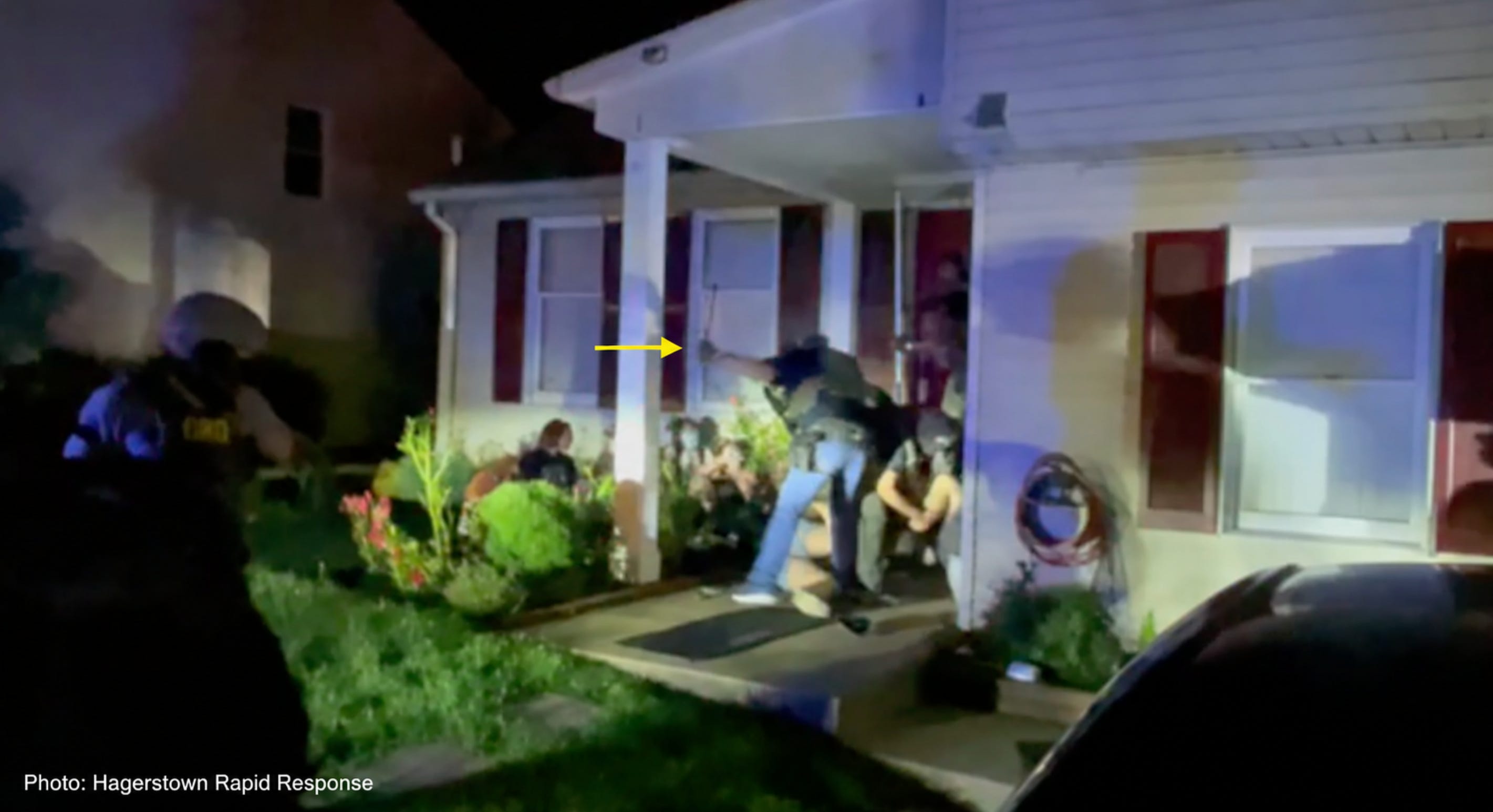
According to Frederick Police Chief Kevin Meyer, his officers asked. During his September 9 interview on WFMD’s The Morning News Express, Meyer said ICE’s response was, “We’re not gonna discuss that with you.” So while people outside that home were being treated as interfering with a law enforcement operation, the agents carrying it out would not even discuss their warrant with the local police.
Most of ICE’s vehicles had no license plates. Their windows were completely tinted, the agents wore masks, and residents watched them drive onto sidewalks and into people’s yards. Meyer confirmed that reports of ICE vehicles running people off the sidewalk were what brought FPD to the scene. Does anyone see a problem with adding “won’t discuss whether they have a warrant” to that list? Residents were apparently supposed to accept that these people were federal agents acting within their authority, even as they concealed their identities and refused to answer local officers’ questions. What is supposed to stop a group of random people from claiming to be ICE and doing the same thing?
Meyer said federal agents “have no requirement to show us even anything” and that FPD could not compel them to do so “because they’re federal authorities.” In the discussion about identifying agents, he described officers being able to ask but unable to make them comply. We should not have to guess what Frederick Police verified before accepting that the people approaching this home were entitled to do so. If ICE would not discuss a warrant, what information did officers have, and who decided that was sufficient?
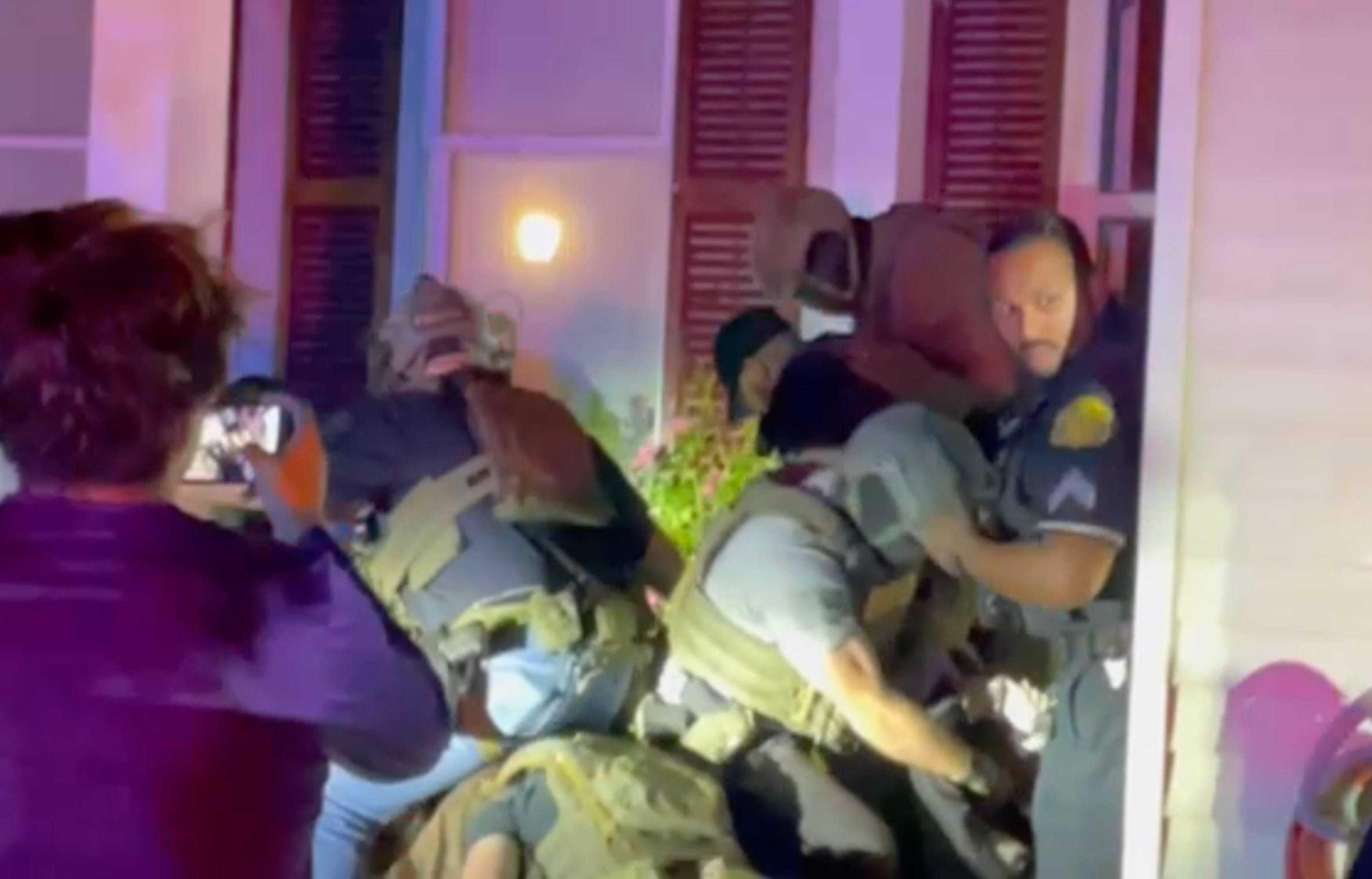
Meyer was much more definite when describing his department’s responsibility to residents. “Our job is to keep the peace, maintain some semblance of order, and make sure that everybody is safe,” he said. He also said, “If we see something unsafe, we have to step in and do something about it.” Yet Frederick Police did not intervene to stop the beatings shown in our videos. Meyer said officers were initially speaking with people in the street and that the confrontation calmed when they reached the house. He also acknowledged that an ICE agent stopped striking someone when an FPD officer arrived with a body camera, calling the timing “awfully coincidental.” His account needs to be compared with the footage, including what officers could see and hear before they approached.
After acknowledging a duty to intervene, Meyer questioned what would happen if an armed municipal officer put hands on an armed federal officer, and how dangerous that could become for everyone nearby. Nobody is suggesting that confronting an armed agent is a casual undertaking. But people were already being hurt, and explaining the danger to officers does not answer what those officers were supposed to do for the people being beaten. Meyer then said FPD could not investigate the federal officers’ excessive-force claims and directed complaints to Homeland Security, the department that oversees ICE. That leaves the people who were hurt being told to ask ICE’s own department to investigate.
Residents were expected to stay out of the way and trust that ICE had the authority to do what it was doing, even as agents refused to answer local police asking about a warrant. People who were beaten are now being directed to complain to the department that oversees the agents who hurt them. Meyer says FPD’s job is to keep everybody safe, but what does that promise mean to someone crying out for help while officers stand nearby? ICE’s refusal does not prove it lacked a warrant, but it gives residents every reason to question whether one existed. If agents had a warrant authorizing what they were doing, why refuse to confirm that to local police? The people demanding everyone else’s compliance should not get to dismiss questions about their own authority with “we’re not gonna discuss that with you.”
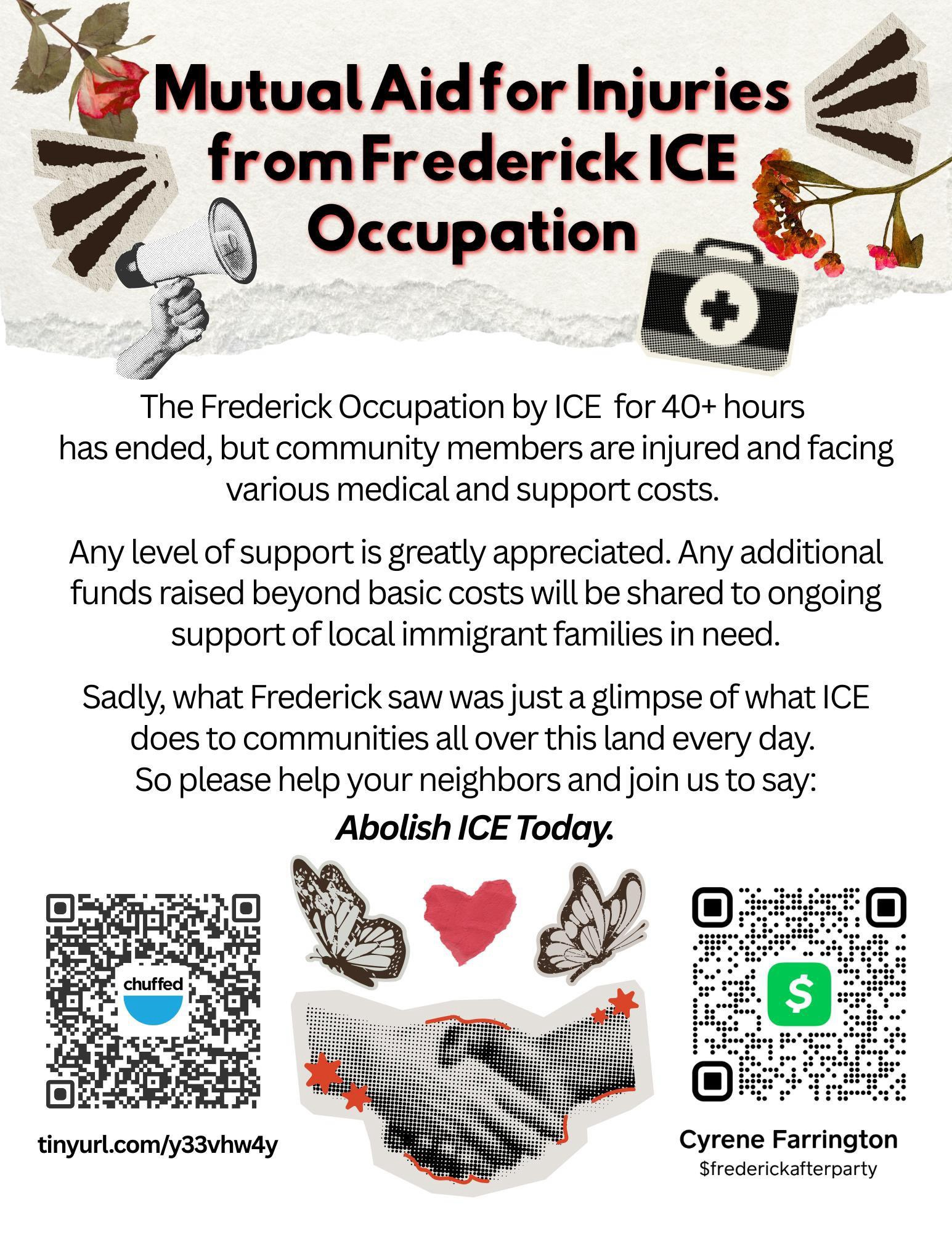
People injured during Friday’s ICE violence in Frederick are now facing medical bills and recovery costs. They showed up for their neighbors, and they need us to show up for them. Please donate what you can and share this fundraiser. Funds raised beyond those costs will support local immigrant families in need.
You can support them here: https://chuffed.org/project/200514-support-frederick-community-members-assaulted-by-ice
and here: https://linktr.ee/westernmdirc
Fire Meyer.
It rhymes and everything.
I watched the beatings on CBS local news, and realized that the Frederick police allowed this criminal behavior to take place. What can be done to get the police to protect citizens from the Gestapo?